50 YEARS OF ITOY
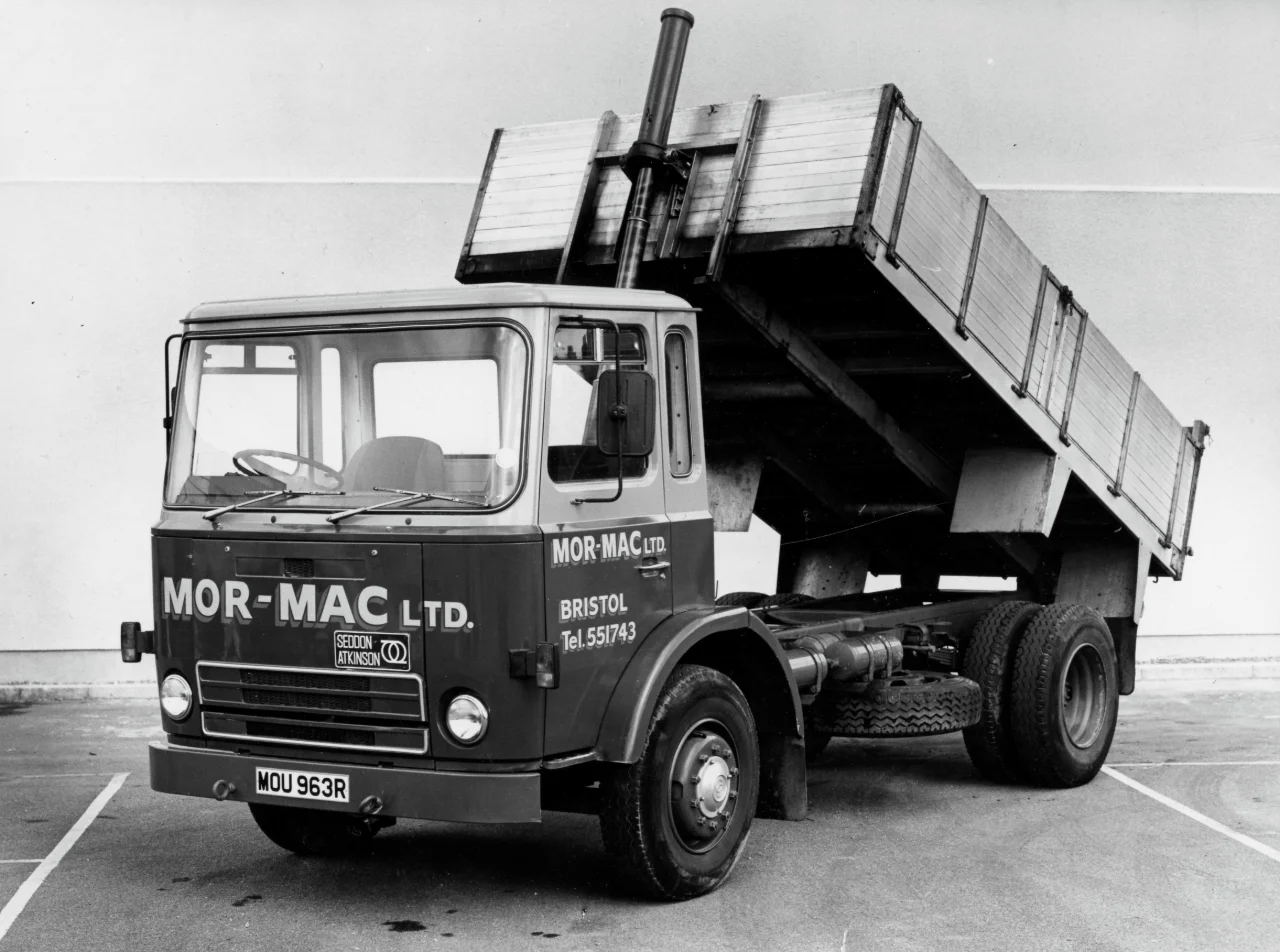
Seddon Atkinson had a real winner on its hands when the heavy-duty 400 Series started to enter service in 1975. Within a couple of years these trucks had secured 17.5% of the British over-28-ton market and the manufacturer turned its attention to the rigid 16-ton market, where Seddon vehicles had traditionally been popular.
The first 200 Series prototypes were unveiled in 1975, with full-scale production commencing in the Spring of 1976. Sharing some chassis components with its larger stablemate, the 200 also featured common cab press pressings for the scaled-down cab which was regarded as luxurious for a British truck of this weight in its day.
An early supporter of the new truck was Pat Kennett, the legendary first editor and co-founder of TRUCK Magazine, who announced the 200 as the inaugural Truck of the Year in January 1977. Whilst not explicitly describing the criteria used for the award, careful consideration was given to a number of other contemporary vehicles, with Kennett single-handedly confirming the winner.
Seddon Atkinson’s mischievous marketing people lost no time at all in exploiting the win with an advert reading, “We’d like to thank British Leyland, Chrysler, Bedford, Fiat and Mercedes for making it all possible.”
In hindsight the 200 was a relatively conventional vehicle marked out by a much-improved cab - supplied by Motor Panels (Coventry), which had produced the earlier Seddon cabs - and an unconventional choice of engine - The International D 358. With Seddon Atkinson being under International Harvester ownership since 1974, the engine choice might have seemed a matter of expediency but officially the men from Oldham rejected the traditional Perkins in favour of the higher power anticipated for 17-ton operation.
With a design dating back to 1965, the German-built engine was well-proven in agricultural tractors operating overseas and the 6.8-litre, 134hp naturally-aspirated 6-cylinder had a longish-stroke and a usable power range between 1,000rpm and 3,000rpm, with a cruising speed of 60mph at 2,600rpm. Unusually for such a wide power-band, a rev-counter was not included in the instruments, leaving the driver to hone his hearing skills.
The engine was matched to an Eaton 5-speed constant mesh gearbox driving a 10.5-tonne single reduction axle, and an Eaton 2-speed axle option was added shortly after introduction. There were three wheelbase options: a 3.8m tipper, and two haulage variants at 4.5 or 5.6m.
With no alternative engine, transmission or cab options, and only offered as a 16-ton vehicle, the 200 seems an odd winner from a modern perspective, but the truck was a popular choice its day, albeit the International engine never fully gained market acceptance with questions over its performance and reliability. The revised 201 model was announced in September 1982, and by December 1983, this was offered with a turbocharged Perkins engine.
Text : Will Shiers