Volvo Trucks revives the combustion engine: diesel, gas, hydrogen… the real future will be multi-energy
At a time when some continue to announce the end of the combustion engine at every conference, the industrial reality of road transport remains far more pragmatic. And at Volvo Trucks, they seem to have understood that perfectly.
The Swedish giant has just unveiled an entirely new combustion engine platform developed fully in-house. A new generation of powertrains designed to run on renewable diesel, Bio-LNG, and even future hydrogen applications.
This announcement is far from insignificant in a context where the entire transport sector is now searching for realistic, profitable, and immediately usable solutions.
The real solution: the energy mix
Whether some like it or not, TruckStop has been saying it since day one: believing that a single technology alone will replace the entire global road transport industry is closer to a political slogan than to operational reality.
Today, Volvo Trucks confirms this trend with a very clear strategy: battery-electric vehicles, hydrogen fuel cells, and combustion engines powered by renewable fuels will all have to coexist for many years to come.
And unlike certain manufacturers that outsource large parts of their development work, Volvo has chosen to design this new engine platform entirely in-house. An extremely important point, because it guarantees complete control over the technological chain.
More efficient, more powerful, and ready for the future
These new 13-liter engines are simply the most fuel-efficient power units ever developed by Volvo Trucks.
The new D13 diesel claims fuel savings of up to 4% compared to the current generation. Combined with the aerodynamic improvements introduced on the new Volvo FH Aero range launched in 2024, the overall gains become particularly impressive on long-haul operations.
But Volvo Trucks did not stop at reducing fuel consumption. Swedish engineers also announce increased torque, lower noise levels, improved engine braking, smoother drivability, and full compatibility with alternative fuels.
The new D13 will deliver between 380 and 560 hp, with up to 2,900 Nm of torque. Meanwhile, the G13 gas-powered version will reach up to 500 hp and 2,800 Nm. Figures that clearly show the combustion engine is still far from dead.
The next-generation diesel engine becomes hydrogen-compatible
This is probably the most strategic aspect of the announcement.
This new platform was designed from the outset to evolve toward green hydrogen applications. In other words, Volvo is already preparing for the post-diesel era while retaining the combustion engine architecture we know today.
An extremely intelligent approach that could allow transport operators to keep a familiar, robust, and fully mastered technology while drastically reducing CO₂ emissions.
In reality, Volvo confirms what many industrial players already believe behind closed doors: the combustion engine will survive for a very long time… but powered by completely different fuels.
An even more advanced I-Shift gearbox
Volvo is also using this new generation to further develop its famous I-Shift transmission. The new engines will receive an optimized version of the Swedish automated gearbox with even more advanced management of the I-See and I-Roll systems.
Some versions will even be capable of completely shutting down the engine while descending hills in order to save even more fuel. We tested this technology during an Occitanie road test with a Volvo FH 460, and honestly, we were genuinely impressed.
The manufacturer also announces major improvements in driving comfort and low-RPM torque management, particularly to support “downspeeding,” which has now become essential in the race for lower fuel consumption.
Engines already prepared for future European regulations
Another key point: these new Euro 6 engines have already been designed to meet future environmental and noise regulations.
The engines will notably comply with the upcoming NNR3 noise standards.
Further proof that major global manufacturers continue to invest heavily in combustion technology despite the often highly radical political rhetoric heard in Europe — sometimes driven more by the search for headlines than by operational realities.
Volvo is already preparing the future of European trucking
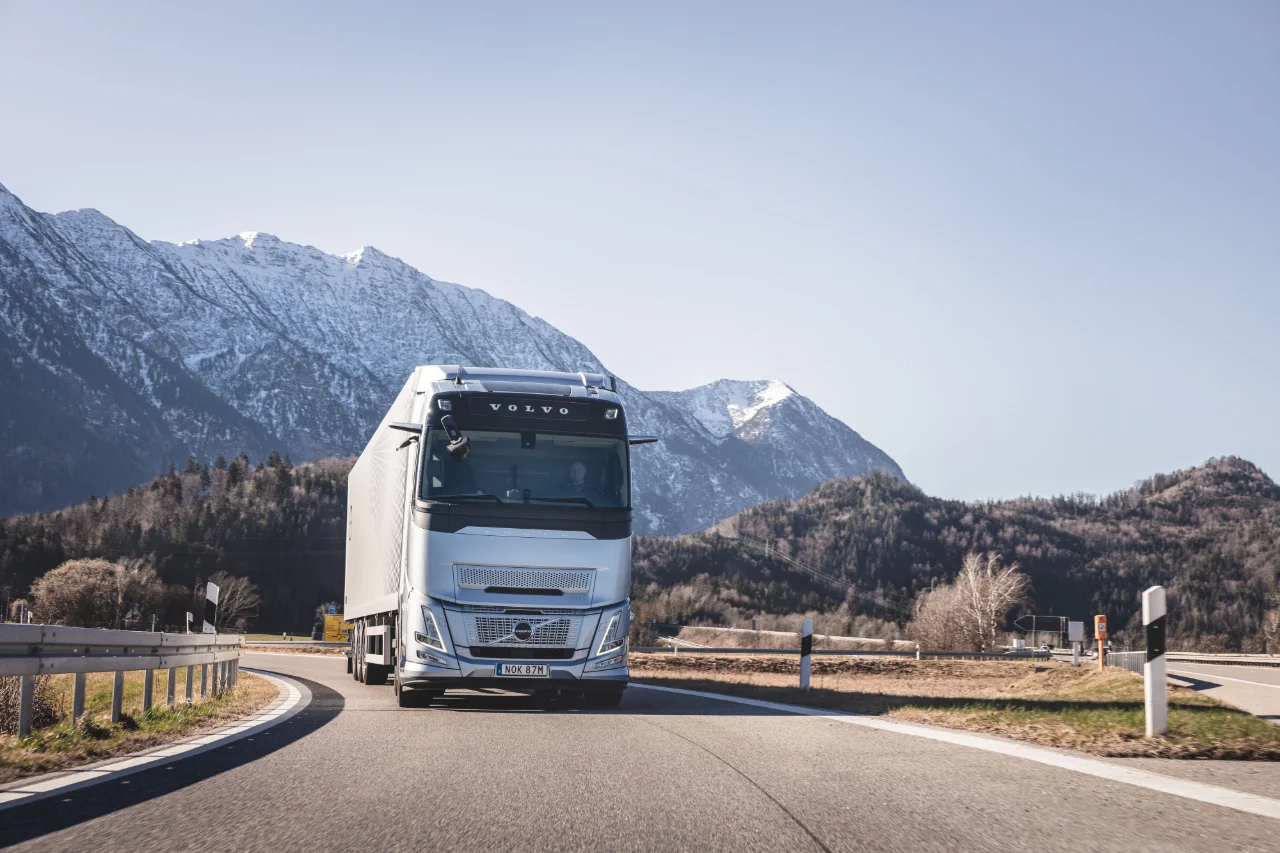
These new engines will gradually arrive on the Volvo FM, Volvo FMX, Volvo FH and Volvo FH Aero ranges starting in the third quarter of 2026.
Europe will be the first market served before a global rollout.
And precisely… in just a few days, TruckStop’s Editor-in-Chief Fabien Calvet will travel to Sweden to discover these new drivetrains in detail — and most importantly, to get behind the wheel of Volvo’s future models.
Electric, gas, next-generation diesel… but also a very big surprise surrounding Volvo Trucks’ upcoming engine technologies.
For now, we cannot say more. But one thing is certain: this Scandinavian trip is likely to generate a lot of discussion over the coming weeks…