TotalEnergies: a 1,000 kW charge for trucks in Phalsbourg
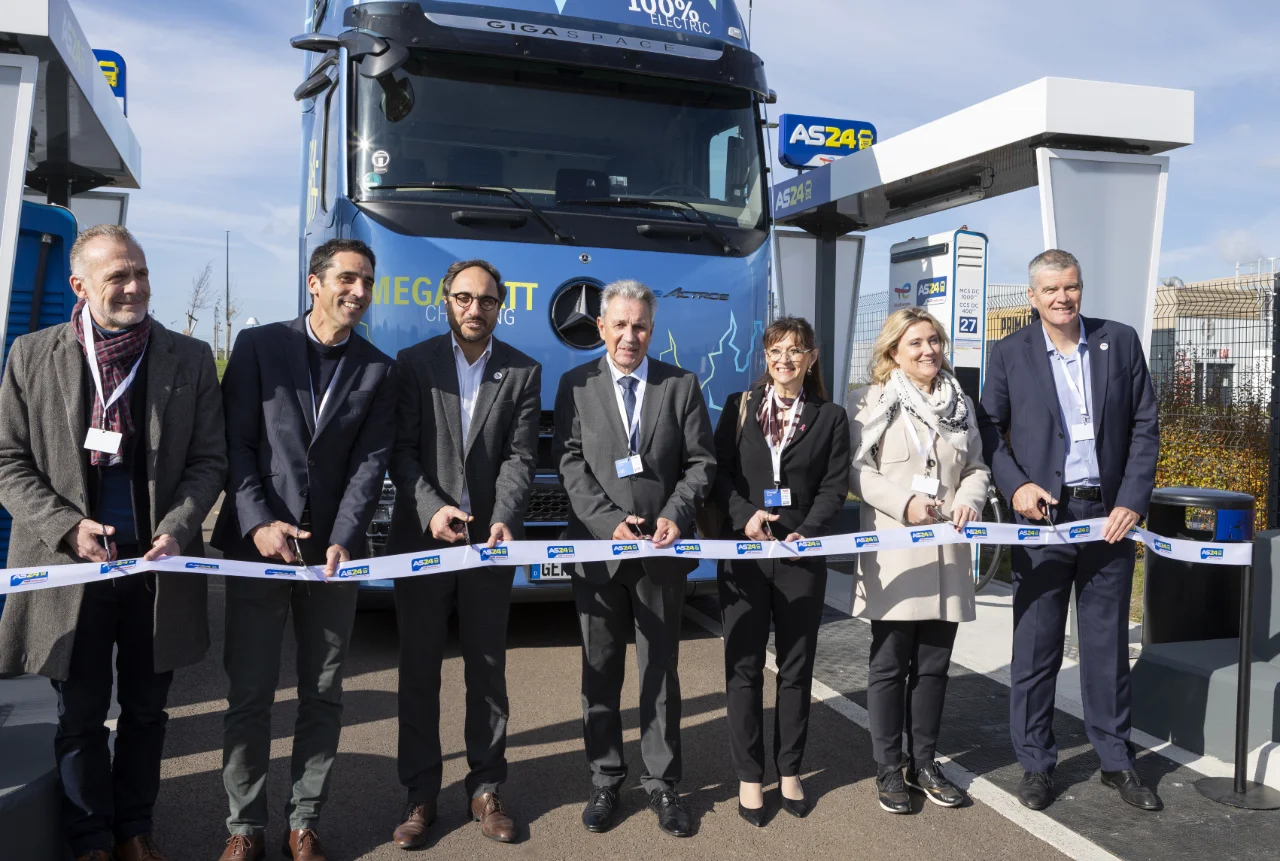
The AS 24 station in Phalsbourg, near the A4 motorway in Moselle, hosts TotalEnergies’ first Megawatt Charging System installation in France. Up to 1,000 kW to reduce the charging time of electric heavy trucks. Now, the number of stations needs to multiply.
With every new road test, we see it: electric trucks are progressing. But to operate them, hauliers need charging points on their routes. A truck capable of covering 500 kilometres solves nothing if the driver cannot recharge at the right place.
Without a charging network, the electrification of transport will remain limited. Depot charging points already allow certain delivery rounds to be carried out. To go further, it is also necessary to be able to plug in trucks en route, without disrupting deliveries.
In Phalsbourg, TotalEnergies adds an MCS lane, for Megawatt Charging System, to the six CCS charging points already present at its AS 24 station. The installation has an MCS connector and a cabinet capable of delivering up to 1,000 kW.
From 20 to 80% during the break
According to TotalEnergies, this technology allows compatible trucks to go from 20 to 80% battery charge in less than thirty minutes. The result however depends on the vehicle’s capacity to accept this power and on the charging conditions.
For the driver as well as for the operator, the benefit is immediate: making use of a stop to recover enough energy and continue the delivery run. Charging must integrate into the work, not impose an additional immobilisation.
But a powerful charging point is not enough. It must be accessible, found available and relied upon to function. It is this regularity that will allow hauliers to commit more electric trucks.
Verifying the power actually delivered
Phalsbourg will also serve as a test site for TotalEnergies’ research and development teams. They will test new MCS-compatible trucks there and analyse the charging curves, the power delivered as well as the functioning of the connection between the vehicle and the charging point.
Because 1,000 kW displayed on an installation does not mean that the truck receives this power throughout the entire stop. For the operator, the useful figure remains the quantity of energy recovered in the time available.
Charging points are needed on delivery routes
Manufacturers are putting vehicles on the market. Charging now needs to be deployed at the same pace: at depots, on logistics platforms and along the routes used by heavy trucks.
A haulier must be able to plan a delivery run without wondering whether their driver will find enough to set off again. As long as this uncertainty remains, purchases will remain concentrated on missions where charging is under control.
The Phalsbourg installation adds an additional option near the A4. To accelerate the electrification of the logistics chain, many more will be needed. The trucks are there. Hauliers are waiting to be able to plug them in where they work.