50 Years of ITOY – 2017 Scania R- and S-series
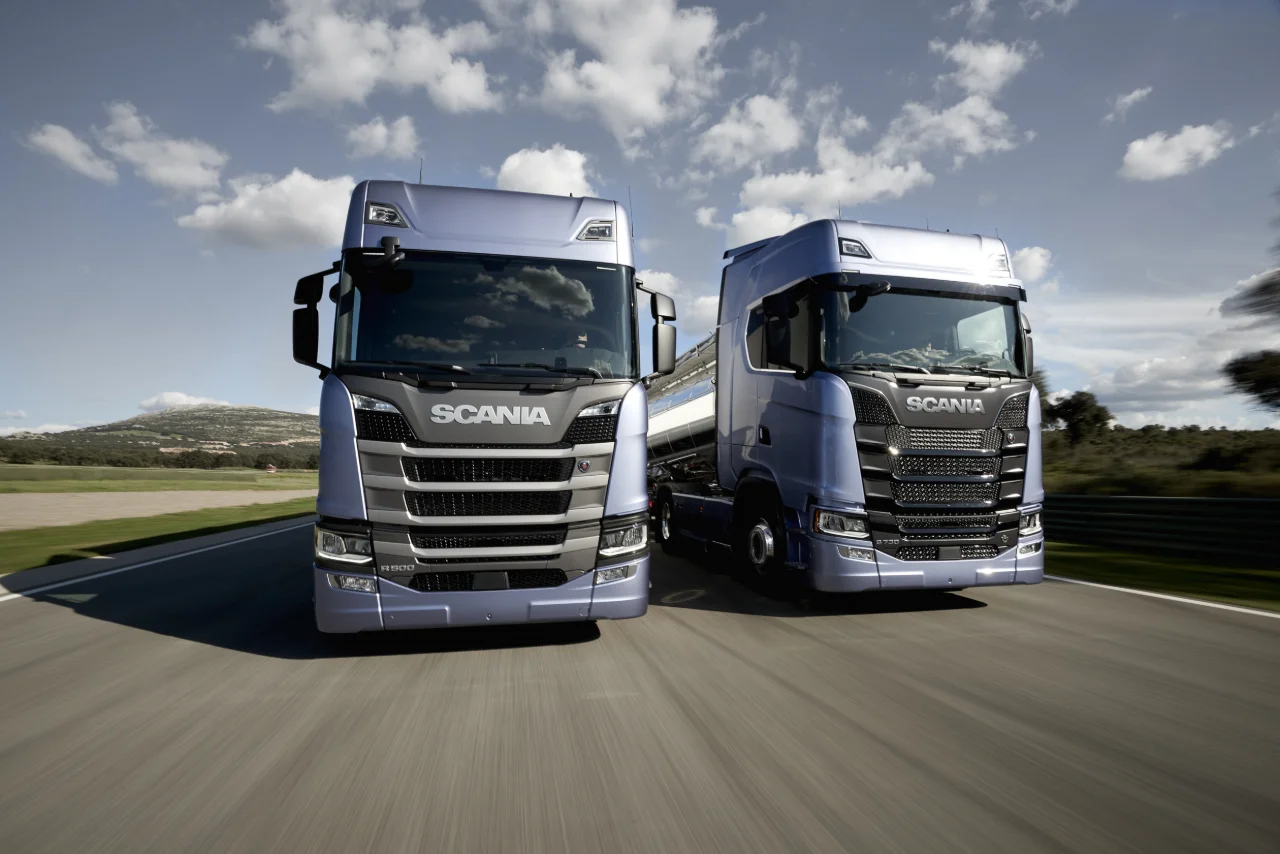
At a launch event in Paris on 23 August 2016, Scania unveiled the product of 10 years of development and over €2bn in investment in the form of the new R- and S-series range. Scania’s “greatest product launch ever” was also relayed to the manufacturer’s considerable social media following through the Next Gen Scania campaign.
The new models were the vanguard of a complete range replacement, starting with long-distance trucks with the largest cabs in the modular production programme. The all-new cabs were developed in cooperation with sister company, Porsche Engineering, and a 2% fuel-saving was achieved with smoother cab corners, tighter-fitting panels and re-designed deflectors, side skirts and under-bumper valances.
Inside the new cabs, the driving position was relocated 65mm closer to the windscreen and 20mm closer to the door, to provide for improved visibility and interior space. The new interiors enhanced these aspects with larger door glazing, slimmer door panels, a lower dashboard and optimised A-pillars and mirrors.
The R cabs received an additional 100mm height in standard form, and 160mm in Highline form, with the former Topline design being dropped. The show-stopping S-series cab was Scania’s first flat-floor design and “outshines everything we have done before in factors like comfort and storage” said Scania’s head of cab development Göran Hammarberg, at the launch.
Clever re-engineering and a front axle moved 50mm further forward reduced the truck’s centre of gravity despite their taller cabs and contributed to improved handling and a 5% shorter stopping distance. In a World-first Scania also offered rollover curtain side airbags, which were integrated into the headlining above the doors and activated by sensors.
A further 3% reduction in fuel consumption was claimed for the revised engine range which featured new engine management systems across the manufacturer’s 13- and 16-litre offerings.
The 13-litre SCR-only engines featured fixed-geometry turbochargers and reworked combustion chambers and new injectors, higher working temperatures with thermostatic oil cooling and directly driven fans. Power ratings for the straight-six were 370hp, 410hp and 450hp with a new 500hp rating with 2 550Nm of torque at the top.
The 16-litre V8 engines maintained their 520hp, 580hp and 730hp ratings and used variable-geometry turbochargers and a combination of SCR and EGR for emissions compliance.
The introduction of a lay shaft brake system on the automated Opticruise gearbox meant that much quicker upshifts were possible with the GRS905 transmission able to change up a gear in 0.4 seconds, to provide both a smoother change and greater retention of turbo pressure. At the back end of the truck a 2.35:1 axle ratio was offered for suitable applications, and a new electro-hydraulic system was applied to steering tag axles with an increase in steering angle and a decrease in weight.
To the surprise of very few people, within a month of its launch the New Generation R- and S- series Scanias were crowned International Truck of the Year at the IAA with 149 votes. Iveco’s Stralis NP and XP models were runners-up with 90 votes with the Mercedes-Benz Actros in third place on 45.